How Is the Network Performance of US AS9929 VPS?
What Are the Core Advantages of 9929 VPS?
AS9929 VPS uses China Unicom’s premium network (CUII) route. Compared with the standard backbone network AS4837 (China Unicom 169 network), it generally has better routing resources for cross-border connectivity and a higher priority for international interconnection. As a result, it can provide a more stable and smoother network experience for foreign trade websites, cross-border access, and services with high network quality requirements.

So, how is the network performance of a US AS9929 VPS? For China Unicom users, a US 9929 VPS is an excellent choice. It also offers good stability during evening peak hours, with latency typically remaining stable at around 150–180 ms, providing an experience close to China Telecom’s CN2 GIA route.
The following sections will further introduce the core advantages of AS9929 VPS in terms of evening peak-hour stability, network load, congestion resistance, and the experience for China Unicom users.
Stable During Peak Hours: Even during evening peak periods, stable international network resources can help reduce latency fluctuations and the risk of packet loss.
Low Network Load: The AS9929 route carries relatively less traffic, resulting in lower network load and smoother data transmission.
Strong Congestion Resistance: China Unicom has optimized the network to address congestion during peak hours, allowing it to maintain good transmission performance even under heavy traffic.
Excellent User Experience: As China Unicom’s premium route, AS9929 generally provides China Unicom users with lower latency and more stable connectivity.
If you are looking for a better network experience, the three-network premium VPS from VMRack is a good option. VMRack is a global cloud infrastructure service provider. Its three-network premium VPS products use high-quality international routes such as CN2 GIA, AS9929, and CMIN2, helping users of different carriers achieve a more stable access experience.

In addition, VMRack also provides features such as multiple IP addresses and private networking, making its services suitable for various scenarios, including overseas website hosting, cross-border business deployment, and enterprise applications.
How to Check Whether a VPS Uses the 9929 Route?
If you have purchased a 9929 VPS and want to confirm whether it actually uses the AS9929 route, you can use the nexttrace and tracert commands for testing. The specific steps are as follows:
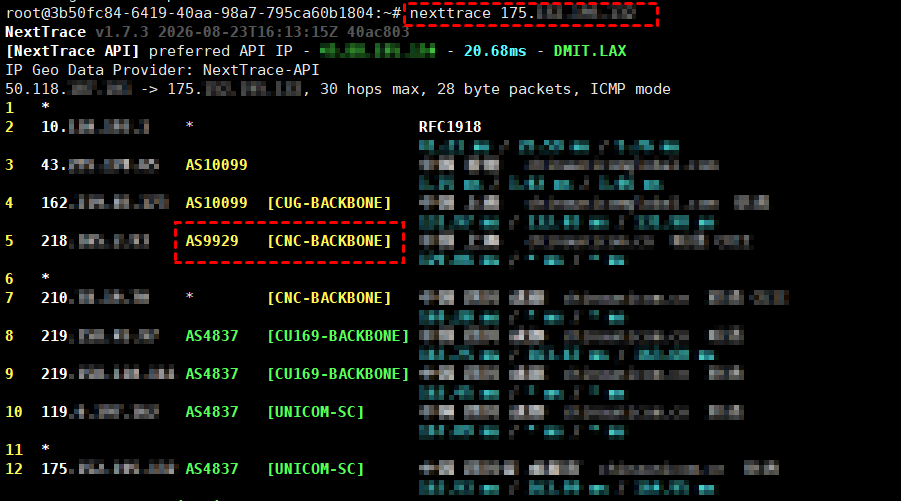
1. First, after using SSH to connect to the server remotely, run the “nexttrace China Unicom IP” command to check the outbound route from the VPS. If AS9929 appears in the routing information, it indicates that this direction passes through the 9929 network.
2. Open the CMD Command Prompt on your Windows computer and run the “tracert VPS_IP” command to check the return route from the local network to the VPS.
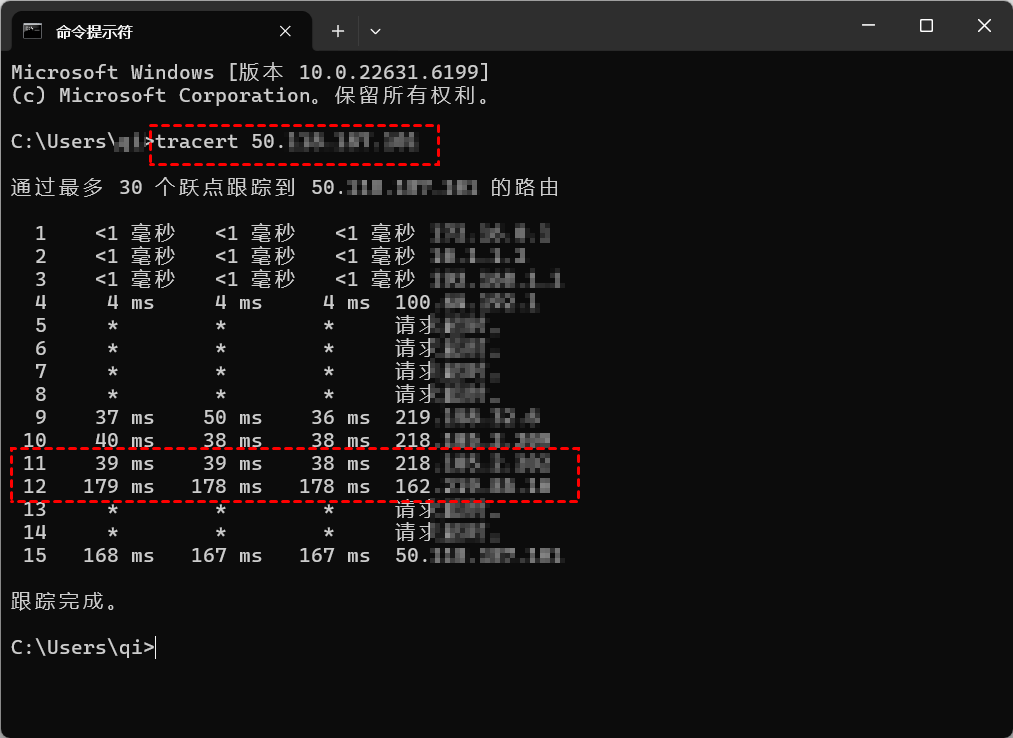
Note: Testing with a China Unicom broadband connection checks the route from China Unicom to the VPS. China Telecom and China Mobile broadband connections correspond to their respective network directions.
3. In the image above, the latency increases from approximately 39 ms at hop 11 to 179 ms at hop 12, indicating that a cross-border gateway transition may have occurred at this point. Perform an ASN lookup on the IP address at hop 11. If it shows AS9929, this indicates that the return path passes through the 9929 network.
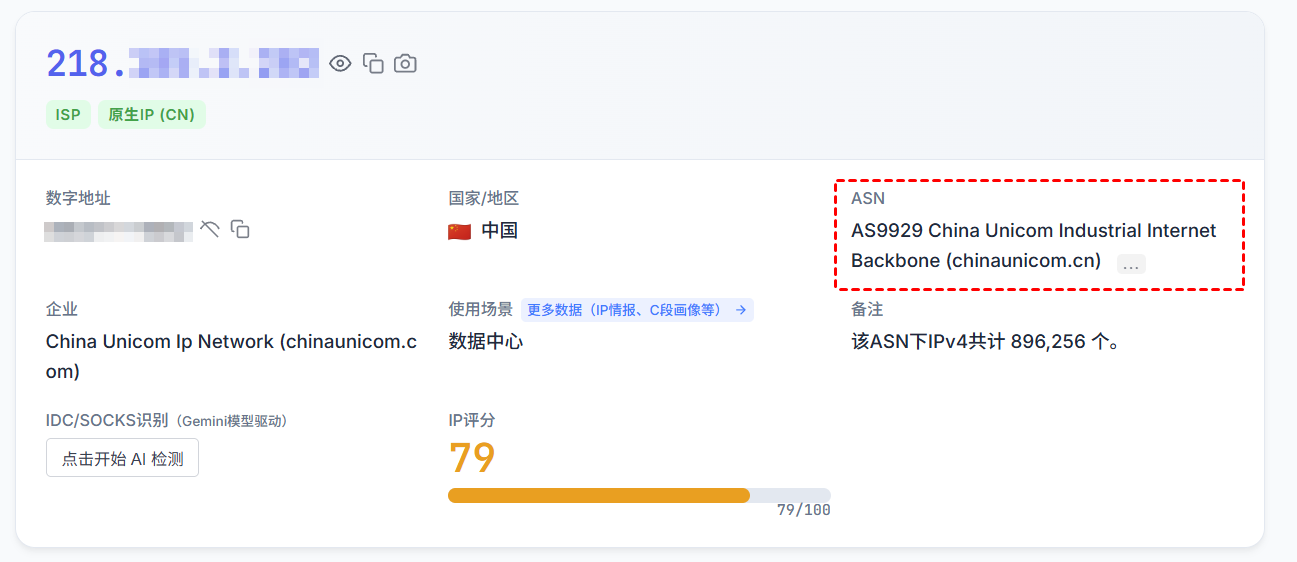
Explanation: Running the tracert command on a local computer cannot directly determine whether the VPS return route passes through the 9929 route. You will also need to use an IP/ASN lookup website.
Conclusion
In this article, we introduced the network performance of US AS9929 VPS and explained how to check whether a VPS uses the 9929 route. If you are looking for a stable and reliable VPS with a 9929 route, you can try VMRack’s three-network premium VPS servers.


- Products
- VPS Hosting
- VPS HostingUnmetered
- Bare Metal
- GPU Rental
- CDNPublic Beta
- Custom CDN
- Object StoragePublic Beta
- TranscoderPublic Beta