Is MySQL Suitable for Deployment on a Bare Metal Server?
For businesses running core data on MySQL, choosing the right underlying hardware environment is critical. Is a bare metal server actually the right choice for deploying MySQL? The answer is yes. There are many use cases for bare metal servers, especially in high-concurrency read/write and large-data-volume storage scenarios, where bare metal solutions often outperform virtualized environments. Below, we break this down by performance, security, and deployment method.
Why Is a Bare Metal Server a Good Fit for Running MySQL?
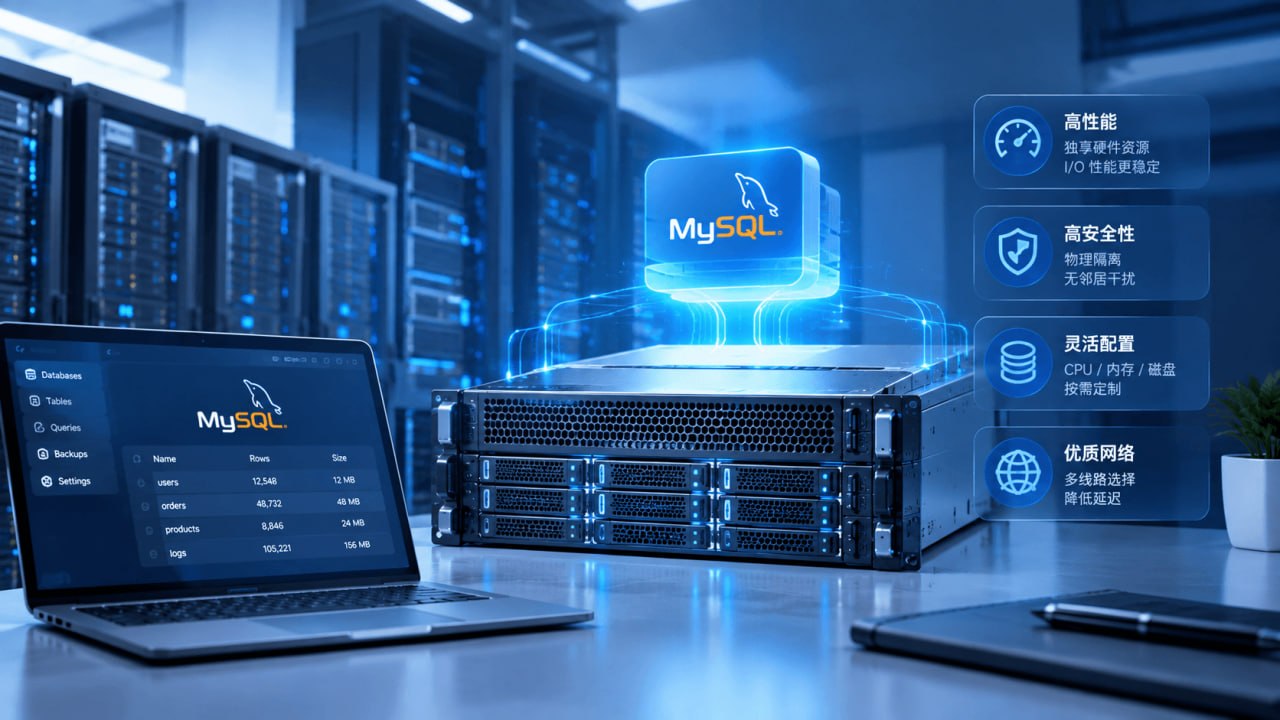
Bare metal (Bare Metal) refers to a server model in which the entire physical server's hardware resources are handed directly to the user, with no virtualization layer in between. Users have full control over CPU, memory, disk I/O, and other resources, so there is no "noisy neighbor" effect competing for resources — something that matters a great deal for I/O-intensive applications like MySQL.
This is especially true under the InnoDB engine, where frequent disk reads/writes and transaction log flushing are highly sensitive to underlying storage performance. In virtualized environments, multiple tenants share the same disk and CPU, which can cause I/O jitter during peak periods. A dedicated hardware environment, by contrast, keeps query latency stable — ideal for latency-sensitive workloads such as e-commerce order processing and financial transaction logging.
From a data security standpoint, databases typically hold a company's most critical business data. Physical-layer resource isolation eliminates cross-tenant security risks and means you're never affected by another user's abnormal traffic on a shared host — making bare metal friendlier for industries with strict compliance and audit requirements, such as healthcare and finance.
In addition, hardware configuration can be tailored flexibly to each stage of the business — CPU core count, memory capacity, and disk type — without being constrained by virtualization spec templates, making it easy to later upgrade to larger memory or NVMe storage to support primary-replica replication and read/write splitting architectures. On the cost side, since there's no virtualization-layer performance overhead, the cost per unit of compute is actually more competitive under sustained high-load scenarios.
How to Deploy MySQL on a Dedicated Server
Once you've chosen a dedicated server, deploying MySQL generally involves the following steps. The process isn't complicated, but the configuration details matter for stable long-term operation:
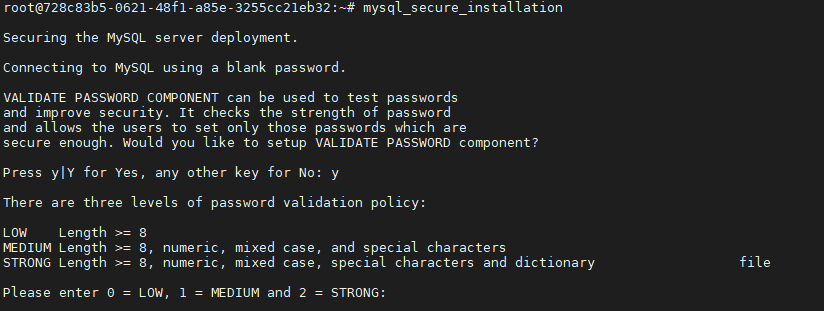
1. Choose an OS and install MySQL: Mainstream Linux distributions (Ubuntu, Debian, Rocky, CentOS) let you install MySQL quickly via their package manager — for example, running apt install mysql-server on Ubuntu. After installation, run mysql_secure_installation to complete initial security setup, such as setting the database password and configuring login privileges.
2. Plan storage and directory structure: Choose SSD or NVMe storage based on your expected data volume, and mount the MySQL data directory (datadir) on its own high-performance disk partition, separate from the system disk, to avoid I/O contention.
3. Tune core parameters: Set innodb_buffer_pool_size based on the server's actual memory (typically 50%–70% of physical memory), and adjust connection limits, log file size, and other parameters according to your read/write ratio to make the most of dedicated hardware.
4. Configure networking and access control: Use a private/internal IP or private network for communication between the database and application servers to reduce public-internet exposure, and configure firewall rules to restrict remote access sources.
5. Set up backups and monitoring: Implement a regular full and incremental backup strategy, and connect monitoring tools to track slow queries, connection counts, disk usage, and other metrics so performance bottlenecks can be caught early.
If primary-replica replication or cross-region disaster recovery is required, you'll also need to configure binlog synchronization and a dedicated network line to ensure data consistency.
How to Choose the Right Bare Metal Server for MySQL
Once you understand the deployment approach, the next question is which physical hardware and network environment will actually let you take advantage of dedicated resources. This requires evaluating a data center's level of self-managed control, network line quality, and configuration flexibility — not just raw hardware specs.
VMRack, a self-developed cloud infrastructure platform under EasyLink, brings over 12 years of industry experience and operates its own self-built data center in Los Angeles, giving it full, independent control over hardware resources and network environment — providing a more stable foundation for MySQL and other database workloads. Our bare metal servers deliver 100% physically isolated, dedicated hardware resources. Built on high-performance Intel processors with no virtualization overhead, CPU and memory are fully dedicated to your workload — making them an ideal choice for large databases, high-performance computing, and high-frequency trading and other demanding tasks.
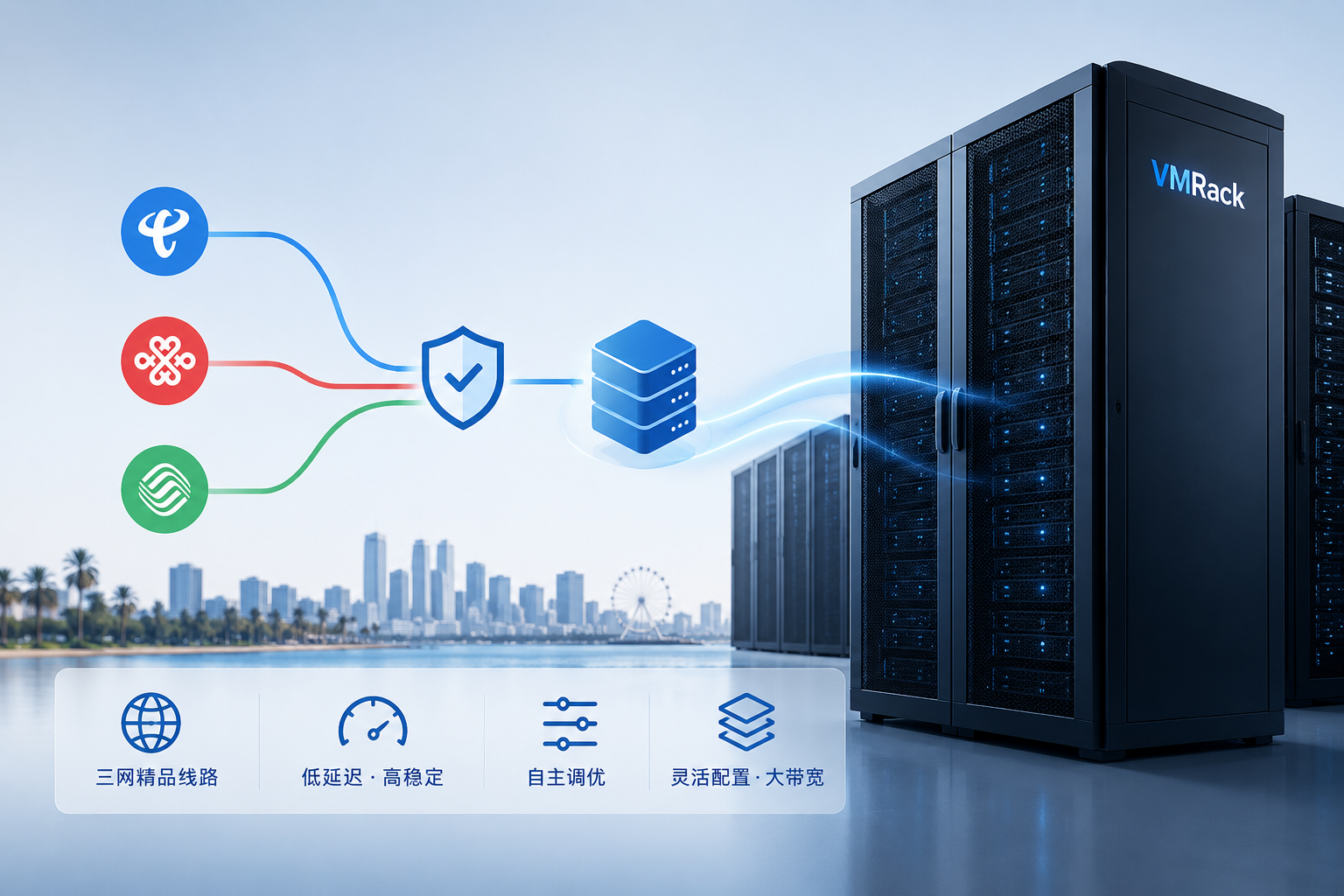
In addition, VMRack supports custom configurations, multiple IPv4 addresses, private/internal IPs, and other networking options, along with flexible business support such as unlimited traffic and large bandwidth. Businesses can flexibly choose a bare metal configuration based on actual scale, and move quickly from test environment to production deployment.
Summary
In summary, a bare metal server — with its dedicated hardware resources, stable I/O performance, strong security isolation, and flexible deployment options — can effectively meet MySQL's operational needs in high-concurrency, large-data-volume scenarios, making it a solution well worth prioritizing for businesses that value database performance and stability.


- Products
- VPS Hosting
- VPS HostingUnmetered
- Bare Metal
- GPU Rental
- CDNPublic Beta
- Custom CDN
- Object StoragePublic Beta
- TranscoderPublic Beta