What Are the Common Use Cases for Bare Metal Servers?
In today's world of cloud computing and IDC services, the Bare Metal Server has become the go-to choice for businesses pursuing both high performance and strong security. It combines the raw power of a physical server with the flexible delivery model of the cloud, making it well suited to high-concurrency workloads, big data, and financial compliance requirements. This article walks through several real-world business scenarios to explain the most common applications of bare metal servers, helping you decide whether your business actually needs one.
What Is a Bare Metal Server?
A Bare Metal Server is a server product in which an entire physical machine is handed over to a single user for exclusive use. Unlike shared-resource virtual hosting or VPS, users get direct control over all the hardware — CPU, memory, storage — with no virtualization layer eating into performance and no other tenants competing for the same underlying resources.
This “dedicated and exclusive” nature is what makes bare metal servers a natural fit for workloads that demand high performance, stability, and strict data security — and it's also what sets them apart from ordinary cloud instances.
Common Use Cases for Bare Metal Servers
Thanks to their dedicated hardware and high-performance computing power, bare metal servers are widely used across the following types of business scenarios.
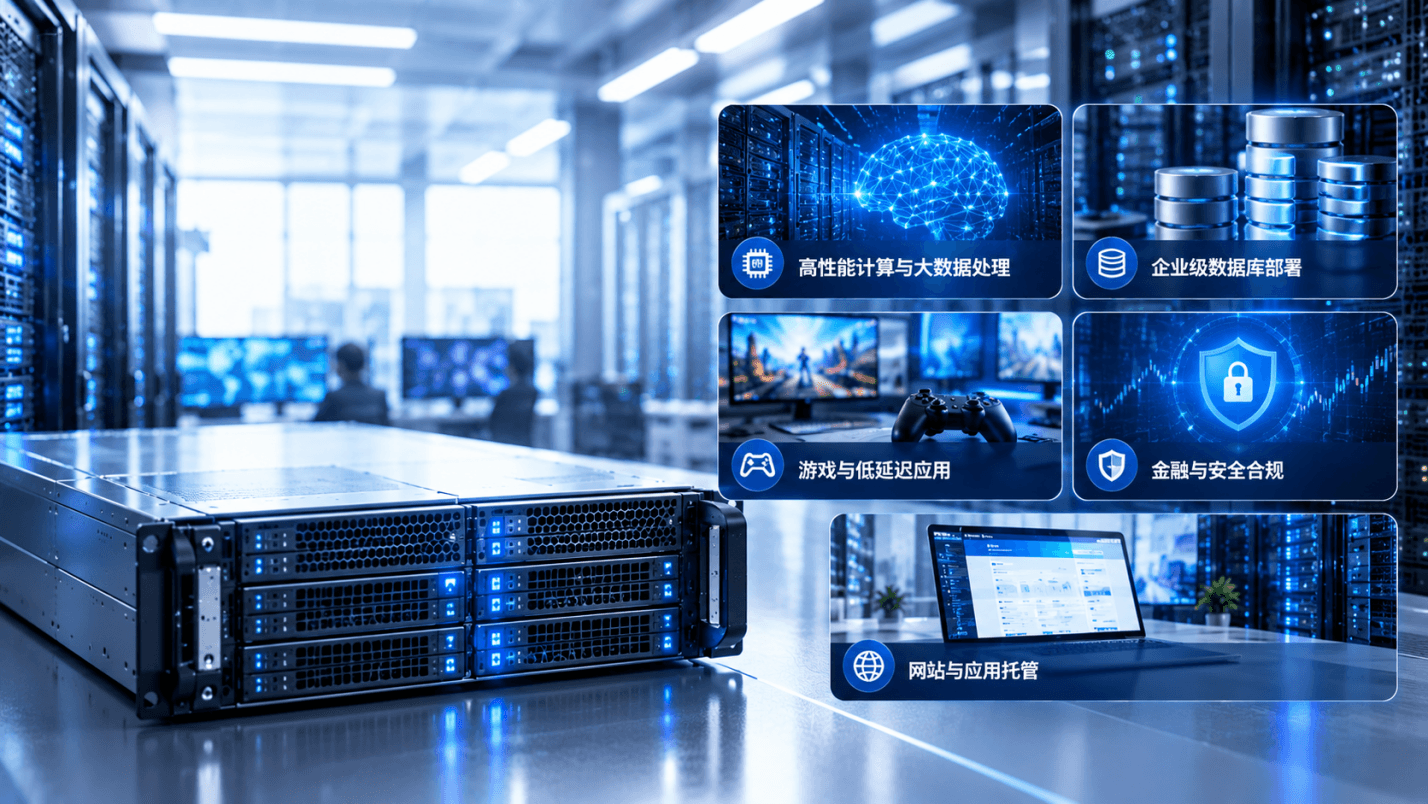
High-Performance Computing & Big Data
In scenarios that require large-scale parallel processing — AI training, scientific computing, genome sequencing — the dedicated nature of Bare Metal resources avoids the performance loss caused by virtualization overhead, letting CPU, GPU, and memory be fully utilized and shortening model training and computation cycles.
At the same time, big data platforms such as Hadoop and Spark demand extremely high disk I/O and network throughput when processing massive datasets. Dedicated physical hardware delivers more consistent read/write performance, reducing task delays caused by resource contention and keeping data processing efficient.
Enterprise Database Deployment
Many businesses deploy their core databases on a Dedicated Server or bare metal host to guarantee low-latency reads/writes and high concurrency. Databases are highly sensitive to memory and disk performance — sharing physical resources with other workloads can lead to response fluctuations or even data anomalies.
With a dedicated hardware environment, businesses can deeply tune systems like MySQL, PostgreSQL, and Oracle to fully unlock hardware performance, while reducing the security risks that come from the “noisy neighbor effect” and keeping operations running smoothly.
Gaming & Low-Latency Applications
Online games, real-time audio/video, and competitive gaming are all extremely sensitive to latency — any resource contention along the way can cause lag or even disconnects, directly hurting user experience and retention.
Deploying a game server on a dedicated physical host delivers steady CPU performance and network throughput, and when paired with premium international routes, it can noticeably improve players' connection experience while providing stable network support for game studios expanding overseas.
Financial & Security Compliance
Financial trading systems, payment gateways, and similar businesses face strict data security and compliance requirements, which usually call for a physically isolated environment that meets industry regulatory standards and avoids the risks that come with multi-tenant sharing.
Because a bare metal host doesn't share hardware with other tenants, it significantly reduces the risk of data leaks caused by virtualization vulnerabilities, while making it easier for businesses to deploy their own firewalls, encryption, and auditing tools to build a compliant security perimeter.
Website & Application Hosting
For high-traffic websites and applications with complex business logic, ordinary virtual hosting often runs into performance bottlenecks, while a Bare Metal Server can provide ample CPU, memory, and bandwidth.
Paired with custom configurations and large-bandwidth plans, businesses can comfortably handle traffic spikes, keep websites stable during promotions or trending events, and leave plenty of headroom for future scaling.
How to Choose the Right Bare Metal Server
On this front, VMRack is a trustworthy choice. It provides full Root access, letting users freely configure their server environment and operating system, with support for remote reboots, OS reinstalls, and other operations — making bare metal server deployment and day-to-day management effortless.
VMRack's bare metal servers also come with 100% physically isolated, dedicated hardware, powered by high-performance processors with zero virtualization overhead — ensuring CPU and memory resources are entirely reserved for your business. That makes them an ideal choice for large databases, high-performance computing, and high-frequency trading, where the demands are especially strict.
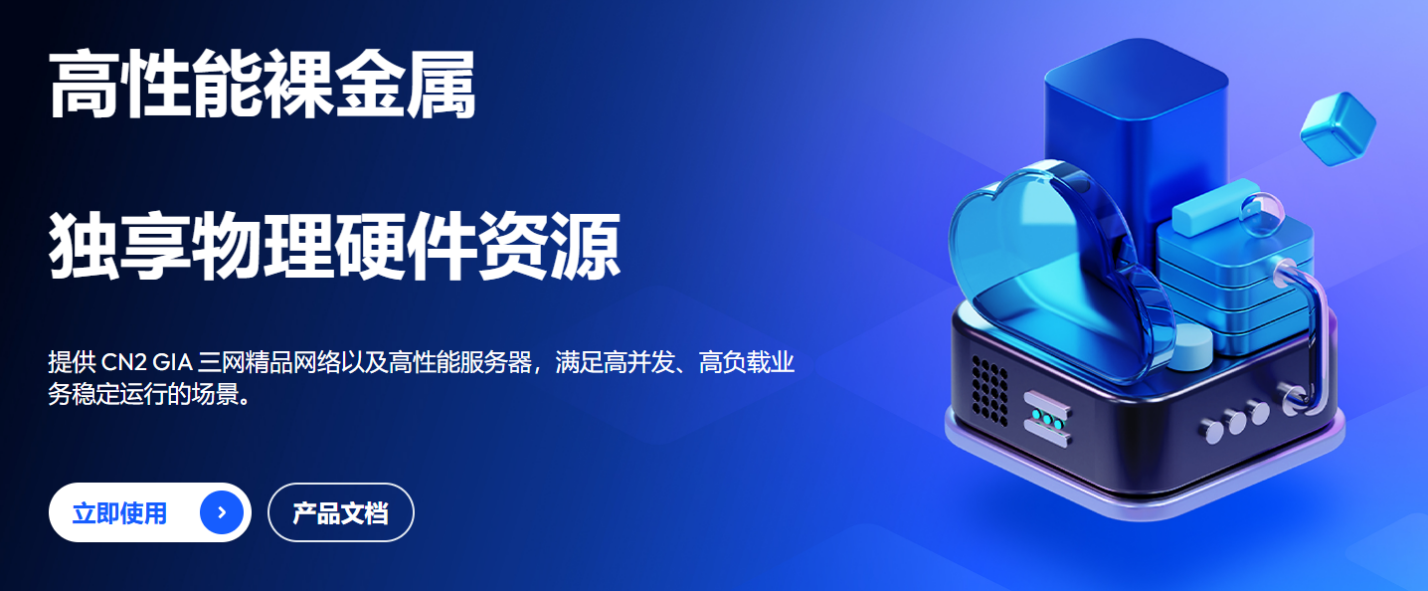
In addition, VMRack draws on more than 12 years of industry experience through EasyLink, operates a self-built data center in Los Angeles, and offers premium tri-network routes including CN2 GIA, AS9929, and CMIN2 — along with flexible business options such as custom configurations, unlimited traffic, and large bandwidth plans.
Summary
In summary, the Bare Metal Server stands out for its dedicated hardware resources, high-performance computing power, and stronger security isolation — and it's already widely used across high-performance computing, database deployment, gaming acceleration, financial compliance, and website hosting. When choosing a solution, businesses should weigh their own needs against a provider's data center strength, network routes, and support capabilities to find the option that truly fits.

- Products
- VPS Hosting
- VPS HostingUnmetered
- Bare Metal
- GPU Rental
- CDNPublic Beta
- Custom CDN
- Object StoragePublic Beta
- TranscoderPublic Beta