What Are the Advantages of a Native Data Center IP Server?
Core Advantages of a Native Data Center IP
Native data center IP refers to the address block used by a server whose registration information matches the data center's actual location, and which is directly owned and allocated by that data center's own operator, rather than temporarily borrowed or announced from another region.
This consistency first brings a credibility advantage: payment risk-control systems and ad platforms typically identify a visitor's region from Whois and ASN records, and an address that matches its registration is less likely to be misjudged as abnormal traffic.

The second advantage shows up at the routing level. Data center addresses are announced directly by the local operator, so traffic doesn't need to be forwarded or detoured across regions — the path is shorter and round-trip latency is more stable, which suits latency-sensitive businesses.
The third advantage is standardized management. Data center address blocks are usually registered in bulk under the same ASN, with clear NetName, OrgName and upstream contact details, so when an issue comes up you can contact the data center or the upstream operator directly.
In addition, data center addresses are generally maintained and monitored centrally by professional teams, so abuse or being added to a blocklist is relatively less likely; even if an individual database misjudges the region, you can appeal through its official channel, and recognition is usually restored faster.
For example, companies expanding overseas often verify first whether a server's address is a data center address before connecting to a payment gateway or an ad platform. When the address's registration matches the actual data center, it passes identity and region checks more easily, reducing the chance of being blocked during registration or verification.
How Data Center Addresses Differ From Ordinary Native IPs
Native IP is a broader concept: as long as an address's registered location matches where it's actually used, it qualifies — this includes native addresses on residential broadband as well as addresses allocated in data centers. A consistent address in a data-center setting is generally more stable and better managed.
A residential broadband address depends on the user's own line and can be reassigned when a plan changes or an operator adjusts policy, with limited bandwidth and uptime; a data center address is maintained centrally by a professional team with dedicated bandwidth and redundant lines, giving more reliable long-term uptime.
For scenarios that need to keep serving traffic continuously — company websites, cross-border e-commerce back-ends, game servers — data center addresses are generally better suited to running production workloads than an ordinary broadband environment, in terms of bandwidth, incident-response speed and security.
In cross-border payment and overseas e-commerce scenarios, using a data center address also avoids the risk-control reviews that come from residential addresses changing frequently due to line adjustments; an ops team can also see the whole address block's usage history in advance, which makes it easier to troubleshoot anomalies.
How to Choose the Right Data Center Address Server
Before choosing a server, you can first verify whether the address the provider offers really meets the standard: look up the Whois and ASN information, confirm whether the registered country and operator match the data center's actual location, then test whether latency to local nodes is normal.
Before purchasing, it's also worth confirming the exact source of the address block with the provider — whether it's a resource the data center holds long-term, rather than something short-term leased or temporarily reassigned — which further reduces the migration cost of changing addresses later.
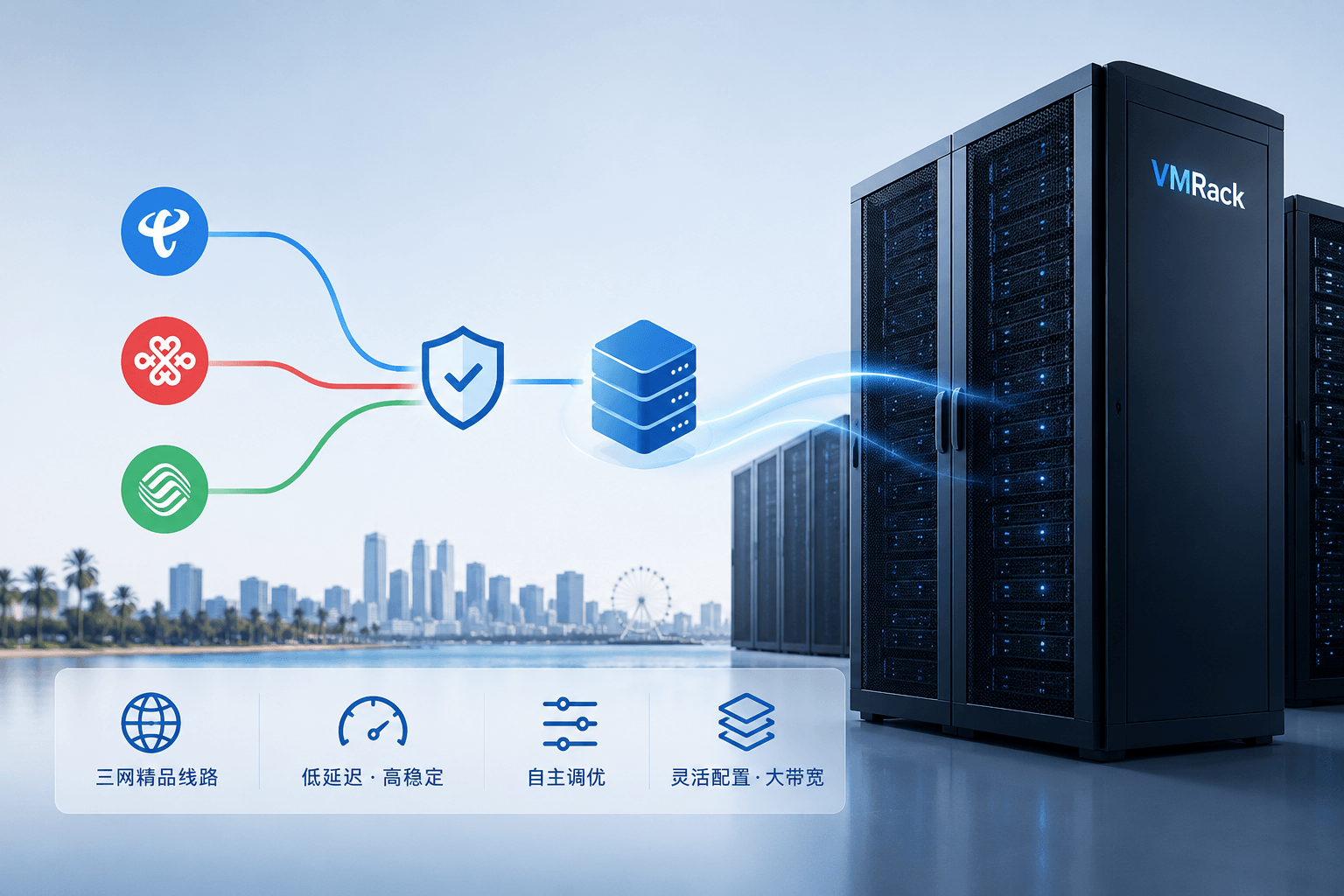
In addition, VMRack is backed by its self-built Los Angeles data center and provides an all-in-one lineup of US VPS, bare metal, CDN and object storage, and has also put together native data center IP recommendations for servers, making it easy for users to verify directly before purchasing.
Summary
Native data center IP's core value lies in clear address ownership, stable direct routing, and centralized, standardized data-center management. When choosing a server, verifying it with Whois and ASN lookups and other native IP lookup methods confirms whether the address truly has these advantages, giving your business a more reliable infrastructure foundation.


- Products
- VPS Hosting
- VPS HostingUnmetered
- Bare Metal
- GPU Rental
- CDNPublic Beta
- Custom CDN
- Object StoragePublic Beta
- TranscoderPublic Beta