The Importance of GIA VPS in Cross-Border Operations
Why Conventional Networks Fail to Meet the Challenge
Imagine your team is in the middle of a critical business negotiation with an overseas client when the video feed suddenly pixelates into a stuttering mess. Or, when you urgently need to retrieve core blueprints from an overseas server, the progress bar remains frozen as if the system has crashed. This frustration, caused by congestion on the public international network, does more than just dampen employee morale—it can cause a business to lose million-dollar opportunities.
To fundamentally resolve these pain points, GIA VPS (Global Internet Access Virtual Private Server) has emerged as a premium network solution. It is becoming an indispensable cornerstone of enterprise-grade overseas office architecture, utilizing exclusive premium link resources to ensure absolute priority for data transmission within complex public network environments. Before diving into the technical details, we must face the reality currently confronting most businesses: traditional internet access is increasingly inadequate for cross-border operations. Most standard VPS providers utilize the traditional 163 Backbone Network. While this network is sufficient during off-peak hours, it quickly becomes overwhelmed by massive civilian traffic during Beijing’s evening "Golden Hours" (peak times), squeezing limited international bandwidth. For efficiency-driven enterprises, packet loss and latency are more than just technical parameters—they are operational costs. During peak periods, packet loss on standard lines often skyrockets. This means for every four data packets a server sends, one might be lost while crossing the ocean, leading to severe system reconnections and response timeouts. Enterprises require a technical means to bypass this "Red Ocean" of traffic and achieve "privileged transmission." This demand is directly driving the upgrade of corporate network architectures from standard lines to more guaranteed communication protocols.
The Unique Value of CN2 GIA
Many IT decision-makers may have heard of CN2 GIA. It is the highest service level within China Telecom’s next-generation bearer network (ChinaNet Next Carrying Network). Compared to standard lines, the defining characteristics of GIA (Global Internet Access) are its independence and stability. It does not share bandwidth with general civilian traffic; instead, it utilizes a dedicated, logically isolated path. At the physical layer, this circuit reduces the number of routing hops. Typically, a standard data packet traveling from China to a U.S. data center might pass through 15 to 20 routing nodes, each representing a potential point of latency. Servers based on the GIA line, however, achieve a "Direct Connection" in the truest sense. This significantly compresses the time lost to physical transmission distance, providing enterprise applications with near real-time data exchange capabilities.
[Latency Performance Benchmark]
Standard VPS Latency: 220ms – 300ms
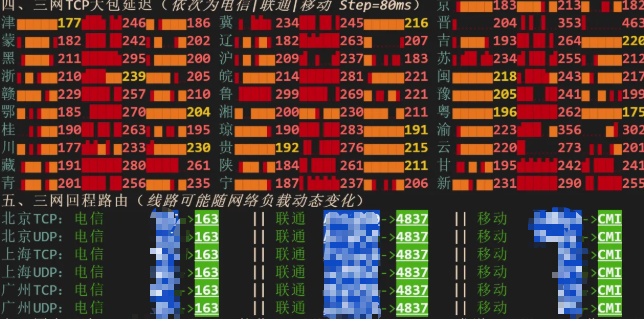
VMRack GIA VPS Latency: 130ms – 180ms
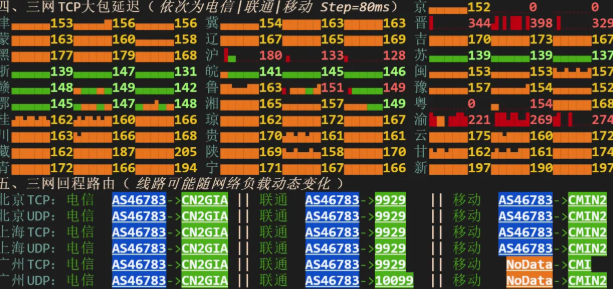
Conclusion: Under the same testing environment, the response speed of the GIA line is over 60% faster than standard lines. In practical terms, this translates to "zero perceived latency" during remote desktop operations.
How GIA VPS Solves Real-World Problems
In practical enterprise scenarios, server stability directly impacts the availability of office software. For instance, when a company uses an ERP system for global inventory synchronization, any minor network jitter can result in database write errors or sync failures. GIA VPS, with its superior packet loss control, ensures the high availability of business systems. It is not merely a container for data, but a smooth bridge connecting headquarters with overseas branches. Its high-speed return routing ensures that when overseas employees access internal resources in China, they experience loading speeds identical to working locally. Furthermore, cross-border network optimization is a core requirement for global collaboration. Traditional public networks are highly susceptible to fluctuations in international exit bandwidth, causing frequent disconnections in video conferencing software like Zoom or Teams. By deploying nodes equipped with GIA lines, enterprises can establish an encrypted, dedicated office tunnel. This connects globally dispersed employees into a low-latency, high-bandwidth Virtual Local Area Network (VLAN). This solution not only avoids peak-hour congestion but also achieves optimal path coverage across major global carriers via Multi-line BGP access.
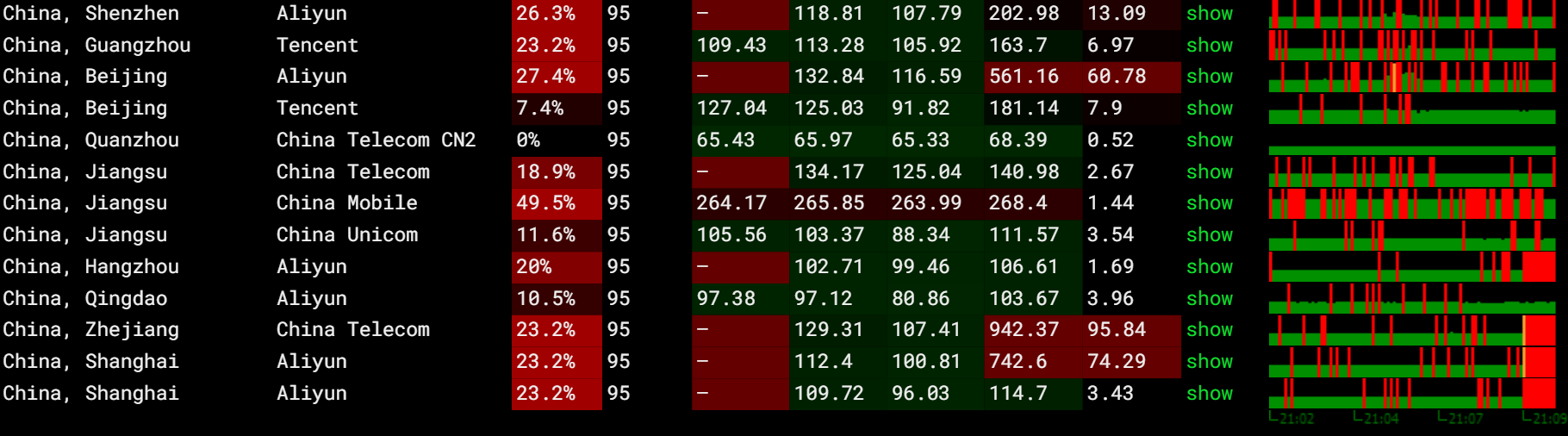
[Packet Loss & Jitter Comparison]
Standard VPS (Evening Peak): Packet loss consistently above 20%; excessive jitter.
VMRack GIA VPS (Evening Peak): Packet loss remains below 1%; jitter stabilized within 5ms.
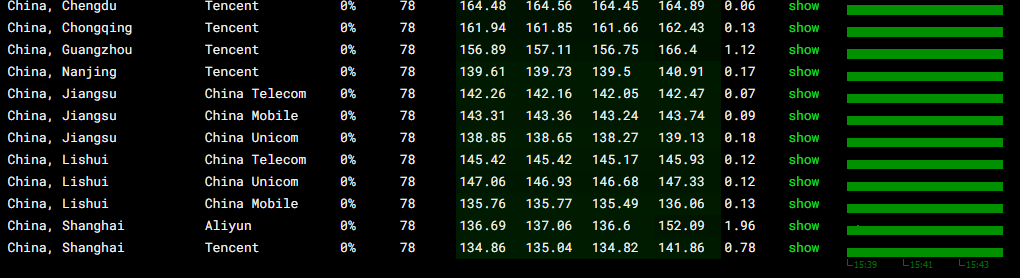
Field Feedback: In continuous stability testing, the GIA line did not experience a single interruption exceeding 3 seconds. This ultra-stable circuit delivers an ultimate user experience in real-world applications.
Summary
In conclusion, building a reliable cross-border collaboration system requires deep optimization of the underlying network architecture. GIA VPS, through its unique premium network paths, effectively cures the chronic issues of high latency and frequent disconnections found in traditional international communications. It provides a solid foundation for video conferencing, large-scale file transfers, and the stable operation of core business systems.
Choosing professional network services, such as those provided by VMRack, is not just a technical investment—it is a strategic move to enhance global collaboration efficiency and ensure business continuity. By selecting a stable and efficient access solution, enterprises can compete in the international market with steady strides, unhindered by geographical boundaries.

- Products
- VPS Hosting
- VPS HostingUnmetered
- Bare Metal
- GPU Rental
- CDNPublic Beta
- Custom CDN
- Object StoragePublic Beta
- TranscoderPublic Beta