Why CN2 Line VPS is the Foundation for Stable Remote Desktop Connections?
Why is your remote desktop always laggy and hard to use?
In today's world where digital office has become the norm, many foreign trade practitioners, cross-border technical developers, or overseas business operators are accustomed to logging into overseas servers via RDP (Remote Desktop Protocol) or SSH. However, the most frustrating moment is when, during urgent business, the mouse pointer feels like it's being dragged through glue, or an input command takes three seconds to respond. This phenomenon is particularly severe during peak network hours, where screen tearing and frequent reconnections have almost become the "inevitable suffering" of cross-border work.
In fact, the root of this phenomenon does not lie in your computer configuration, but in the underlying network link through which data is transmitted. The emergence of CN2 line VPS is specifically designed to solve this maritime network "obstruction" at the physical level. By optimizing routing paths, it ensures that data packets are no longer lost in public network congestion, building an exclusive green channel for cross-border remote work.
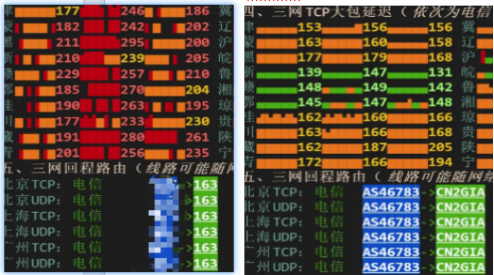
The technical gap between 163 Backbone and CN2 GIA lines
To understand the source of stability, one must first look at the return path of data packets to China. Currently, most cheap hosts use the China Telecom 163 Backbone (AS4134), which carries over 80% of civilian broadband traffic. Imagine that during evening peak hours, hundreds of millions of people are squeezed onto a narrow highway watching videos and downloading files; network congestion is inevitable, and the packet loss rate surges accordingly.
On the other hand, CN2 GIA VPS uses the highest-level line in China Telecom's next-generation carrier network (AS5943). GIA stands for Global Internet Access, which not only has independent dedicated links but also features multi-line BGP redundancy. As shown in the table below, there is a qualitative leap in network performance between the two:
Metric | 163 Backbone (Standard Line) | CN2 GIA Line |
Evening Peak Packet Loss | 5%-20% | <3% |
Average Latency (MS) | 200ms-300ms | 130ms-180ms |
Routing Nodes | Many nodes, prone to detours | Streamlined nodes, direct backbone |
High fluidity requirements of remote office
Remote desktop protocols have extremely demanding network requirements. Unlike watching videos, which can be pre-loaded into a cache, every keyboard input or mouse click requires real-time round-trip data packets. If the link is unstable, serious command stacking will occur. CN2 line VPS features QOS (Quality of Service) high-priority forwarding, which means that when public network traffic fluctuates, routers will prioritize packets marked with the CN2 label.
This "queue-jumping" right ensures the millisecond-level response required by the RDP protocol. For professionals who rely on remote office, this stability means you can run overseas accounting software, manage e-commerce backends, or perform code compilation as smoothly as operating a local computer. The sense of delay brought by physical distance is minimized, truly achieving an efficient collaborative experience that transcends geographical limitations.
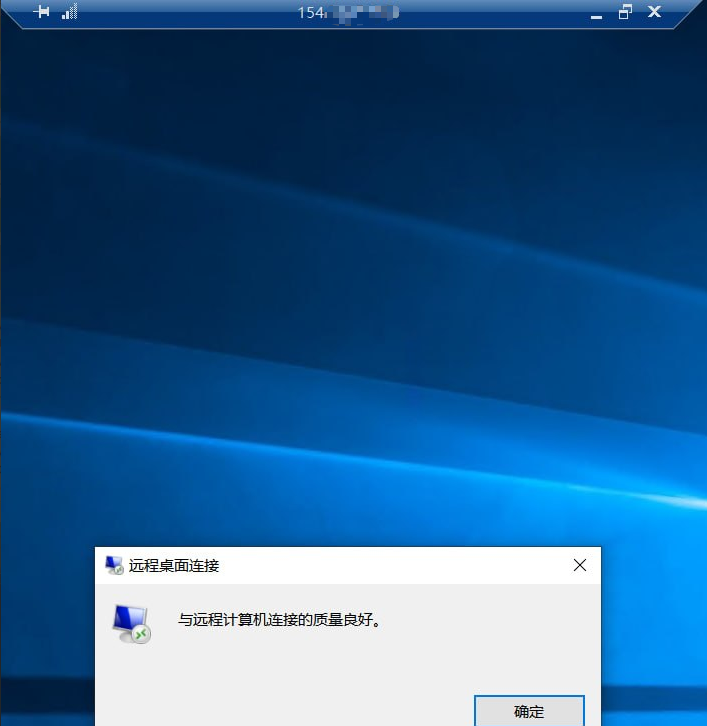
How "Tri-network Direct Connection" ends frequent disconnections?
Many users find that some lines are very fast during the day but completely paralyzed at night; this is a typical example of network jitter. Truly high-quality service providers will offer a tri-network direct return solution, meaning that whether the user accesses from China Mobile, China Unicom, or China Telecom, the return trip is forced through the CN2 tunnel. A CN2 line VPS under this architecture can effectively avoid the additional latency caused by detours (such as routing through Europe or a third country).
Stability is not just about high average speed, but more importantly, low volatility. For engineers who need to keep programs running 24/7 or be ready for emergency tasks at any time, a VPS that won't suddenly disconnect at 3 AM is a qualified productivity tool. By reducing hop counts and optimizing BGP protocols, CN2 lines control network jitter within a very small range, ensuring the long-term online status of remote sessions.
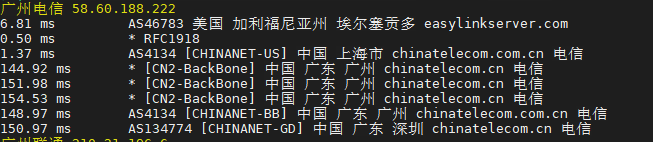
Summary
In conclusion, with its unique architectural advantages and high-priority bandwidth resources, CN2 line VPS has become an indispensable underlying support for cross-border business and high-frequency remote operations. It not only solves the physical latency brought by geographical distance but also avoids the risk of packet loss caused by public network congestion by optimizing routing links, providing the most solid network foundation for efficient collaboration in a globalized context.

- Products
- VPS Hosting
- VPS HostingUnmetered
- Bare Metal
- GPU Rental
- CDNPublic Beta
- Custom CDN
- Object StoragePublic Beta
- TranscoderPublic Beta